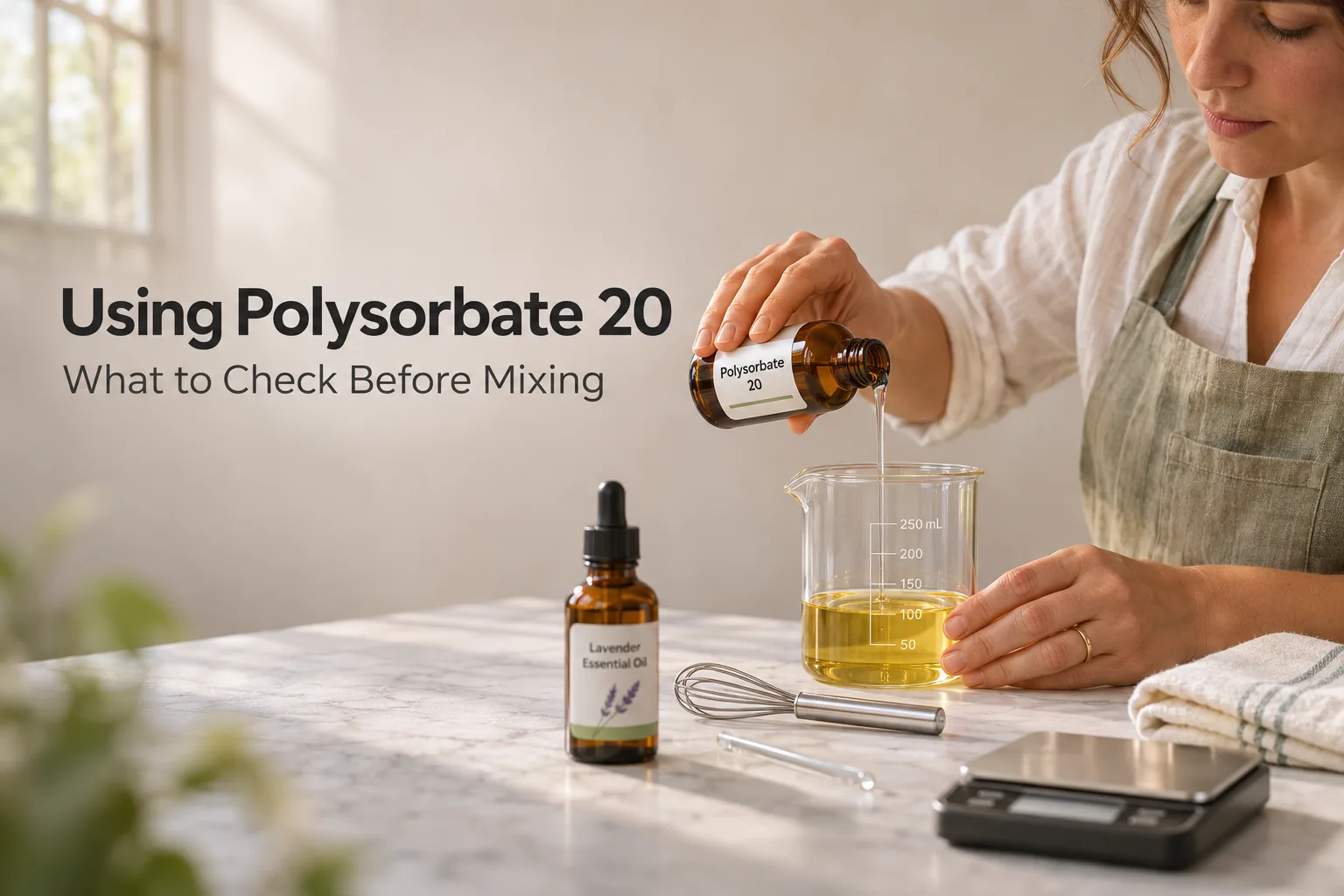
Planning to use polysorbate 20 to add fragrance or essential oils to a toner or body wash? The first decisions are how much to use and which mixing instructions apply to the intended formula. Before measuring ingredients, a formulator should look for instructions that specify both. An ingredient’s stated purpose should not substitute for a complete recipe.
Start with the intended formula
A useful starting point is a written description of the proposed product: its format, ingredients and intended use. This gives the formulator specific questions to resolve before choosing quantities or a mixing sequence.
For example, a hypothetical toner project could begin with three questions:
- Does the formulation guidance cover the selected essential oil or fragrance?
- What quantities does the documented formula specify?
- What preparation steps and finished-product checks accompany it?
These are questions for selecting instructions, rather than a recipe. Avoid assigning an oil percentage or a solubiliser ratio simply to fill a gap in the formulation.
Understand the stated application
When considering how to incorporate fragrance or essential oils into a body wash or toner, distinguish the ingredient’s stated application from instructions for a complete formula. According to Range Products’ polysorbate 20 product page, polysorbate 20 can be used to solubilise fragrance or essential oils into water or surfactant-based products, including body washes and toners. This describes a possible use; it does not specify how to make a particular formulation.
The next question is more specific: what instructions cover the proposed combination of ingredients? A description of where an ingredient can be used does not, by itself, establish quantities, mixing order or the outcome of a particular formula. Those details should be resolved before treating the application as a method.
Establish quantities and method before proceeding
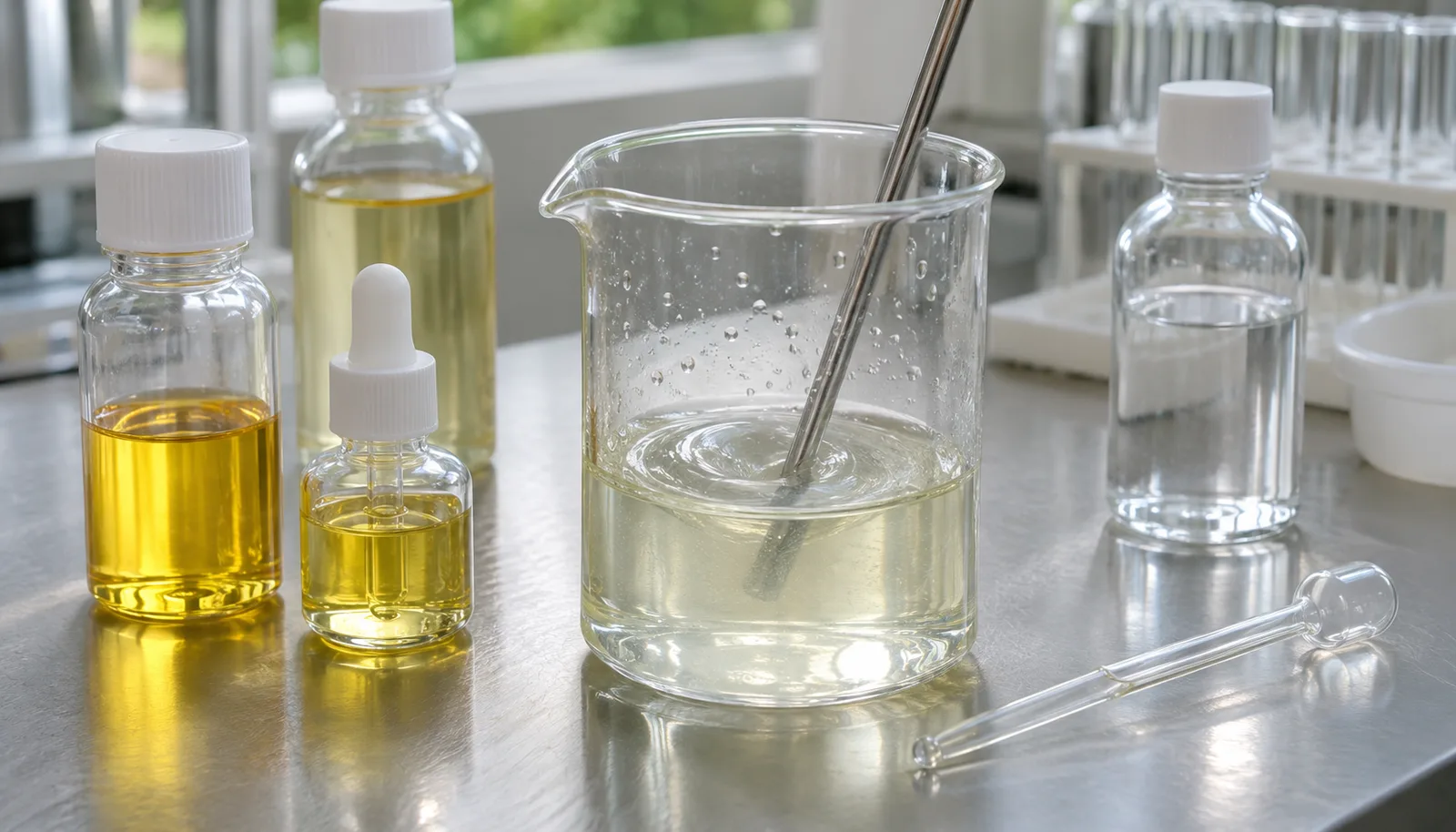
When reviewing a proposed formula, the formulator should look for clear answers about:
- The exact materials and quantities to measure.
- The order of addition and any specified mixing conditions.
- The criteria used to assess the finished product.
- The scope of any accompanying safety assessment.
If the instructions leave a point unanswered, record it as an open question. Do not replace missing directions with an assumed premix procedure, temperature or promise of clarity.
Keep a trial tied to its instructions
For a documented trial, record the formula, ingredient identities, measured quantities and procedure followed. Record observations separately from conclusions: “appeared clear immediately after mixing” describes an observation without claiming longer-term performance or suitability for use.
Before proceeding, check whether the chosen instructions actually answer the original practical questions: how much polysorbate 20 to use, how to incorporate it and how to assess that specific finished formula.